
We’re Just Friends
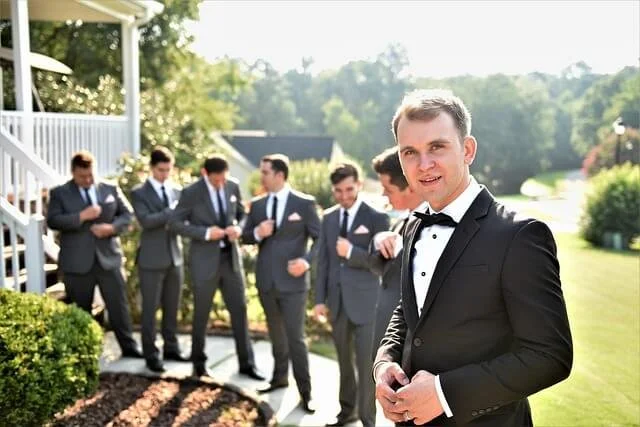
John 3:25-30 (ESV) Now a discussion arose between some of John's disciples and a Jew over purification. 26 And they came to John and said to him, “Rabbi, he who was with you across the Jordan, to whom you bore witness—look, he is baptizing, and all are going to him.” 27 John answered, “A person cannot receive even one thing unless it is given him from heaven. 28 You yourselves bear me witness, that I said, ‘I am not the Christ, but I have been sent before him.’ 29 The one who has the bride is the bridegroom. The friend of the bridegroom, who stands and hears him, rejoices greatly at the bridegroom's voice. Therefore this joy of mine is now complete. 30 He must increase, but I must decrease.”
The Lord said that among prophets there was none greater than John the Baptist (Luke 7:28). Without question, he spoke by the Holy Spirit. By the Spirit, he recognized Jesus as the Christ. He walked closely with the Father and heard amazing things from Him, like, “The one on whom you see the Spirit descending and remaining - this is the One who baptizes with the Holy Spirit” (John 1:33). John decreased so that the Lord Jesus might increase. He fulfilled his assignment and prepared the way for the Lord.
Yet I have a question about him, and about verse 29 in particular. Here it is: Why be a friend of the bridegroom when you could be the bride?!!
John knew that he had to decrease and that the Lord had to increase, but could it have been that he was not willing to decrease in prominence down to the level of becoming just another one of Jesus’s disciples? Could he have grasped in his heart just a little reluctance to die to himself entirely, just a little bit of ambition maybe, just a little bit of desire for position or prominence or respect or power? We read that he continued to mentor disciples after Jesus had begun in ministry. Was there a bit of very subtle competition?
Matthew 9:14 (NIV) Then John’s disciples came and asked him, “How is it that we and the Pharisees fast often, but your disciples do not fast?”
A friend of the bridegroom seeks his own bride. The friend of the Bridegroom listens to Him and rejoices at His voice, but that friend will yet seek his own bride. John never relinquished his own band of disciples before he died. Perhaps he never let go of that little bit of self, that little bit of fallenness, that beckoned him toward enjoying his own ministry. He did not oppose Jesus or His disciples or their work, but he maintained his own thing. “The heart is deceitful above all things and desperately wicked. Who can know it?” (Jeremiah 17:9). Could this have been a blind spot for John? I’m just wondering.
Yes, the friend of the Bridegroom “stands and hears Him” and “rejoices greatly because of the Bridegroom’s voice.“ He finds joy in the Bridegroom, the Bride, and their life and work together. He himself, though, doesn’t commit all of his life and mind and resources to the Bridegroom. He doesn’t allow his name to be changed while the Bride loses hers. He doesn’t yield his body, his dreams, his plans. He does not relinquish his independence. He doesn’t commit to intimacy and suffering. He doesn’t adorn himself for the Bridegroom’s pleasure. He doesn’t follow Him wherever He goes. He doesn’t commit himself absolutely to His authority. While the Bride plunges in, the friend never decreases to the point of disappearing in Christ. He views it all from afar.
From afar, he views the irreversible blending and union of two Lives, the tenderness, the commitment, the familiarity. But this he will never know because he must have his own bride. It’s as if he asks this question to the Bridegroom, “Can’t we just be friends?”
And at this I step in and interject, “No. That will never do for me. I must have union with the Lord. Blessed matrimony. I do not look for any other.”